09:00 - 10:30
Session 2.1 - Wastewater Treatment Plants as Biofactories: From Wastewater Treatment to the Production of Strategic Resources
Briefing
Theme 2 of BWW 2026 addresses sanitation, particularly wastewater management, as a structural pillar of sustainability, water and energy security, and urban development. The approach emphasizes resource recovery, system decarbonization, effective integration of innovation, and the consolidation of circular models applied to the sector. The theme aligns with global sectoral public policies, environmental and climate agendas, the 2030 Agenda, and ESG principles, reinforcing the strategic role of sanitation in the transition toward more efficient and resilient systems.
The proposal highlights the evolution of Wastewater Treatment Plants (WWTPs) into biorefineries and sustainable production units, capable of going beyond their conventional function of pollutant removal to transform socio-environmental liabilities into strategic assets. In this context, practical case studies and technological pathways are explored for water reuse, clean energy production, nutrient recovery, and the generation of high value-added products such as hydrogen. These approaches contribute to mitigating environmental impacts, optimizing the use of natural resources, improving operational performance, and advancing the universalization of sanitation services.
The theme encompasses high-efficiency, low environmental impact technologies, advanced operational practices, process optimization methods, smart retrofits, and progressive solutions that enable circular economy models in sanitation. It takes an integrated view of technical, regulatory, institutional, and financial aspects. It also highlights the integration of sanitation with ecosystem services and nature-based solutions, expanding its contribution to climate change adaptation, emissions of mitigation, and increased urban resilience.
The discussion prioritizes applied experiences, technical and institutional cooperation, and the development of replicable agendas, fostering a qualified dialogue among utilities, the private sector, startups, academia, international organizations, and public institutions, in alignment with the strategic pillars and international positioning of BWW 2026.



10:30 - 10:45
BWW Connection
10:45 - 12:15
Session 5.1 – Water Diplomacy and Transboundary Conflict Management
Briefing
In times of climate change, water crises, and extreme events, it is increasingly important to consider water governance from a broader and global perspective, particularly as multilateral conflicts and disputes are expected to intensify in the coming years.
Flood- and drought-related disasters have intensified worldwide in recent decades, becoming a growing threat to the environment, human life, and national economies. Recent international events, such as the World Water Forum (notably the last three editions in Brazil, Senegal, and Indonesia), the UN Water Conference (2023), COP30 (Belém, Brazil, 2025), and conferences organized by UNESCO, FAO, and UN-Habitat—highlight vulnerabilities, tensions, and risks related to water security, both present and future. These discussions reinforce that nearly half of the global population experiences severe water scarcity during part of the year (IPCC, 2023, cited by UNESCO, 2024), and that water stress significantly affects economic and social stability, potentially contributing to around 10% of increased global migration. In Brazil, similarly, there are large-scale challenges due to shared borders with ten countries and the presence of approximately 60% of its territory within transboundary river basins, totaling more than 80 border or transboundary rivers.
These issues point to broader reflections on strategic themes such as water diplomacy, bilateral and multilateral agreements, international financing, and collaborative water governance, as essential elements for ensuring the sustainable, equitable, and peaceful use of transnational water resources.
This panel will explore these aspects through diverse Brazilian and international experiences, lessons learned, and insights into integrated transboundary basin management, water security, pollution control, inequality in water access, ecosystem pressures, governance mechanisms, social participation and transparency, climate adaptation and resilience, interregional planning, multilateral cooperation and agreements, and technical-scientific exchange and innovation. The aim is to contribute to discussions and the development of collaborative and sustainable solutions at the international level.
Speakers:
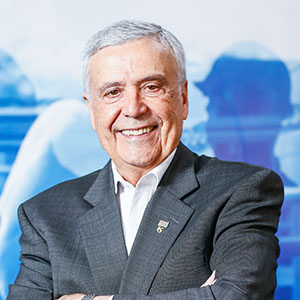
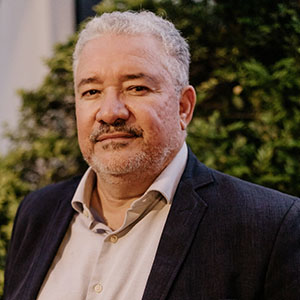

Moderator:

12:15 - 13:30
BWW Connection
Water Diplomacy
Speaker:

Sérgio Campos
BID
13:30 - 15:00
Session 6.1 – Water Resilience Engineering
Briefing
The intensification and increasing frequency of extreme hydrological events associated with climate change pose unprecedented challenges to planning, water engineering, and the sanitation sector. In this context, water resilience engineering emerges as a strategic approach for planning, design, adaptation, and operation of infrastructure capable of responding to uncertain scenarios, reducing vulnerabilities, and ensuring the continuity of essential services.
This panel will address how principles of resilience, flexibility, robustness, and adaptive capacity are being incorporated into the engineering of water systems across different territorial scales. Practical experiences and technical approaches applied to water supply systems, wastewater collection and treatment, urban drainage, flood control, and integrated water resources management will be discussed, with an emphasis on adapting existing infrastructure and designing more resilient solutions in the face of droughts, floods, and systemic failures.
The discussion will bring together complementary perspectives from academia, service operators, regulators, planning institutions, and international experts, promoting the integration of conceptual foundations with practical applications. The session will highlight how engineering can support more informed decision-making processes, contribute to climate adaptation strategies, and strengthen water security in a context of accelerated environmental change.
Speakers:
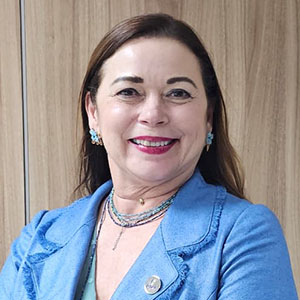
Suzana Montenegro
Presidente da Agência Pernambucana de Água e Clima (APAC)


Moderator:

15:00 - 15:15
BWW Connection
15:15 - 16:45
Session 7.1 – Safe Water
Briefing
The Safe Water panel brings together national and international experiences, integrating different perspectives. International cases primarily contribute to innovations and established models, while national cases, in addition to these aspects, may also present specific challenges and solutions. This dialogue strengthens technical cooperation, encourages the adoption of best practices, and contributes to more effective public policies. By bringing together experts from different contexts, the panel promotes applied knowledge, enhances water security, and supports the protection of public health.