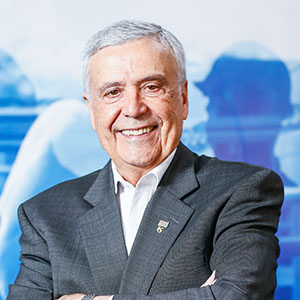
Dr. Cesar Mota é Professor Associado no Departamento de Engenharia Sanitária e Ambiental da UFMG. Possui doutorado em Engenharia Civil e Ambiental (North Carolina State University, EUA, 2006), mestrado em Engenharia Civil e Ambiental (University of Nevada, EUA, 2001) e graduação em Engenharia Civil (Universidade Federal do Ceará, 1998). É o coordenador do Instituto Nacional de Ciência e Tecnologia em ETEs Sustentáveis (INCT-ETEs Sustentáveis), financiado pelo CNPq e FAPEMIG, e coordena a Rede Covid Esgotos, projeto financiado e desenvolvido em parceria com a Agência Nacional de Águas e Saneamento Básico (ANA), que realiza o monitoramento do SARS-CoV-2 nos esgotos de Belo Horizonte, Rio de Janeiro, Brasilia, Curitiba, Fortaleza e Recife. Além disso, o Dr. Mota atualmente coordena a Rede de Vigilância da Resistência Antimicrobiana nos esgotos de cidades e hospitais brasileiros (ReViRAE), desenvolvida em parceria com o Ministério da Saúde, os LACENs, Fiocruz, Universidades e companhias de saneamento de 10 capitais brasileiras. Atua nas áreas de tratamento de esgoto e água para abastecimento, com ênfase em recuperação de recursos do esgoto, remoção/inativação de organismos patogênicos de água e esgoto e vigilância de esgotos como ferramenta epidemiológica. Foi Professor do quadro permanente da Newcastle University (Reino Unido) de 2007 a 2012, onde coordenou projetos financiados pela Royal Society (Reino Unido) e pela Comissão Européia. É Bolsista de Produtividade em Pesquisa do CNPq – nível 1D.
Dr. Cesar Mota is an Associate Professor in the Department of Sanitary and Environmental Engineering at UFMG. He holds a Ph.D. in Civil and Environmental Engineering from North Carolina State University (2006), an M.Sc. in Civil and Environmental Engineering from University of Nevada (2001), and a B.Sc. in Civil Engineering from Federal University of Ceará (1998). He is the coordinator of the National Institute of Science and Technology on Sustainable Wastewater Treatment Plants (INCT-Sustainable WWTPs), funded by the CNPq and FAPEMIG, and also coordinates the Covid Sewage Network, a project funded and developed in partnership with the National Water and Basic Sanitation Agency (ANA), which monitors SARS-CoV-2 in wastewater from the cities of Belo Horizonte, Rio de Janeiro, Brasília, Curitiba, Fortaleza, and Recife. In addition, Dr. Mota currently coordinates the Wastewater-Based Antimicrobial Resistance Surveillance Network (ReViRAE), developed in partnership with the Brazilian Ministry of Health, the LACEN laboratories, Fiocruz, universities, and sanitation companies from 10 Brazilian state capitals. His research focuses on wastewater and drinking water treatment, with emphasis on resource recovery from wastewater, removal and inactivation of pathogenic organisms from water and sewage, and wastewater surveillance as an epidemiological tool. From 2007 to 2012, he was a permanent faculty member at Newcastle University, where he coordinated projects funded by the Royal Society (United Kingdom) and the European Commission. Dr. Mota is also a CNPq Research Productivity Fellow (Level 1D).